(duplicate 'translation. . . )
Description
Constructs a mesh by duplication using a translation. Points are extruded into lines, lines into quadrilaterals and quadrilaterals into hexahedras.
Syntax
(Duplicate 'rotation mesh rep. translation-vector)
Parameters
mesh The mesh to be extruded by translation. This mesh could be conatin points, lines or quadrilaterals. rep. Number of extrusion. translation-vector vector of translation. For instance translation in the z-direction of length O.1 meter is given by the vector (vector 0 0 0.1).
Examples
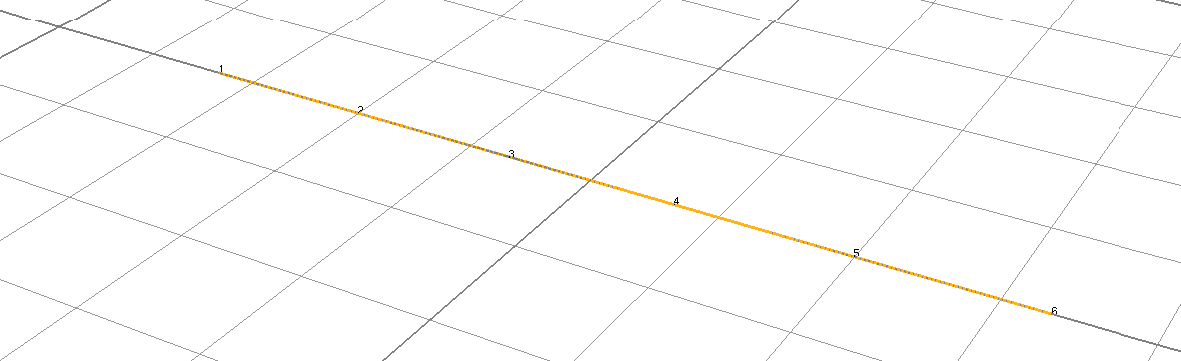
Duplicate a point into lines by translation
Define a mesh named my-mesh which contain a single point giving its coordinates:
(define my-mesh (make-mesh 'single-point (vector 0.1 0 0)))
;;; Here the coordinates of the point are (x=0.1, y=0, z=0).
;;;Duplicate the point into lines:
(duplicate 'translation my-mesh 5 (vector 0 0.1 0))
;;;The mesh my-mesh is now a line which contains 5 segments of
;;;length 0.1 meter generated by translation along the y-axis.
;;;Visualize the mesh:
(view 'mesh my-mesh)
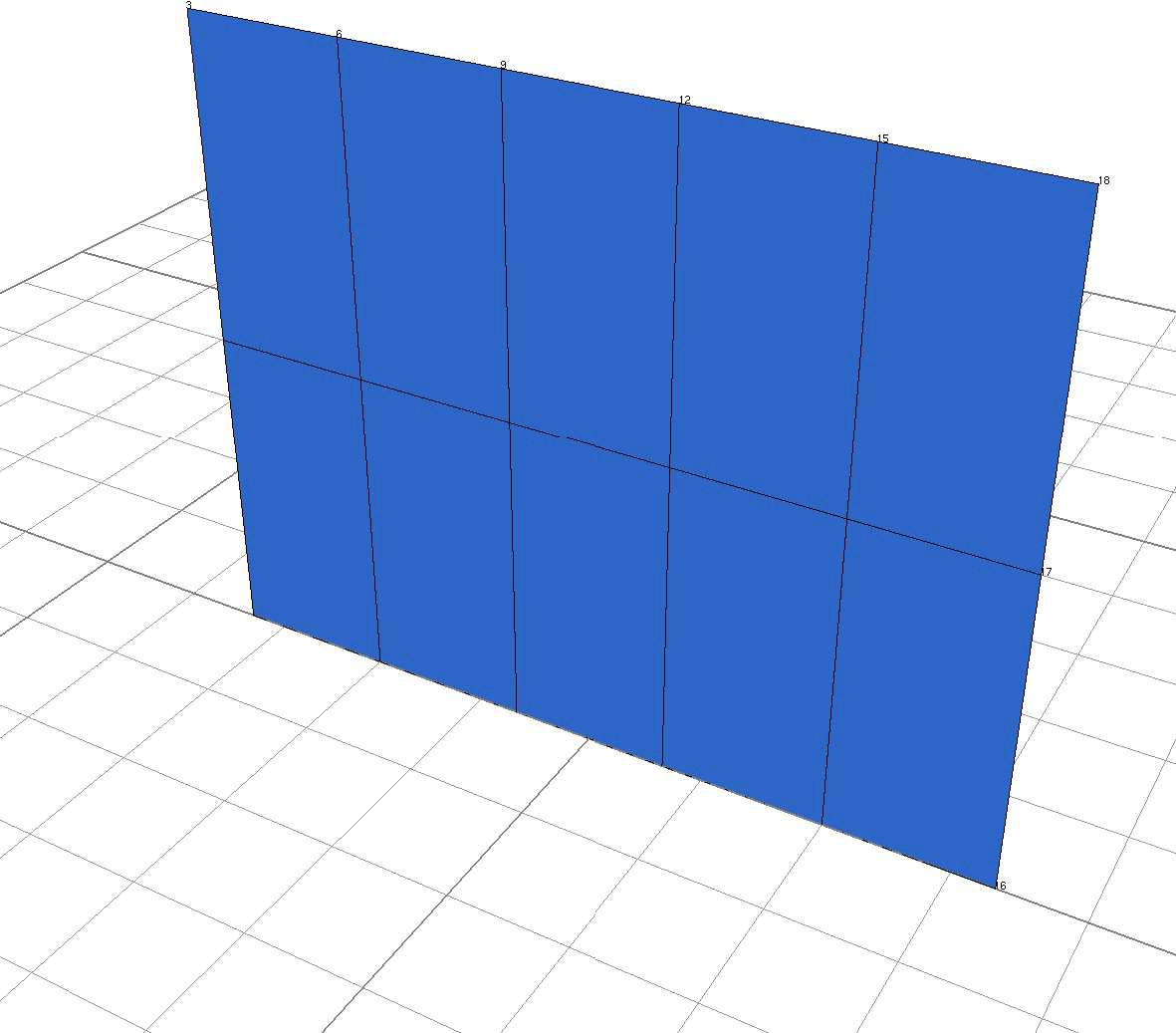
Duplicate the previous line into quadrilaterals
(duplicate 'translation my-mesh 2 (vector 0 0 0.2))
(view 'mesh my-mesh)
Duplicate the previous quadrilaterals into hexahedras
Take the quadrilaterals from the previous example and generate hexahedras by translation (duplicate 'translation my-mesh 6 (vector -0.05 0 0)) (view 'mesh my-mesh)
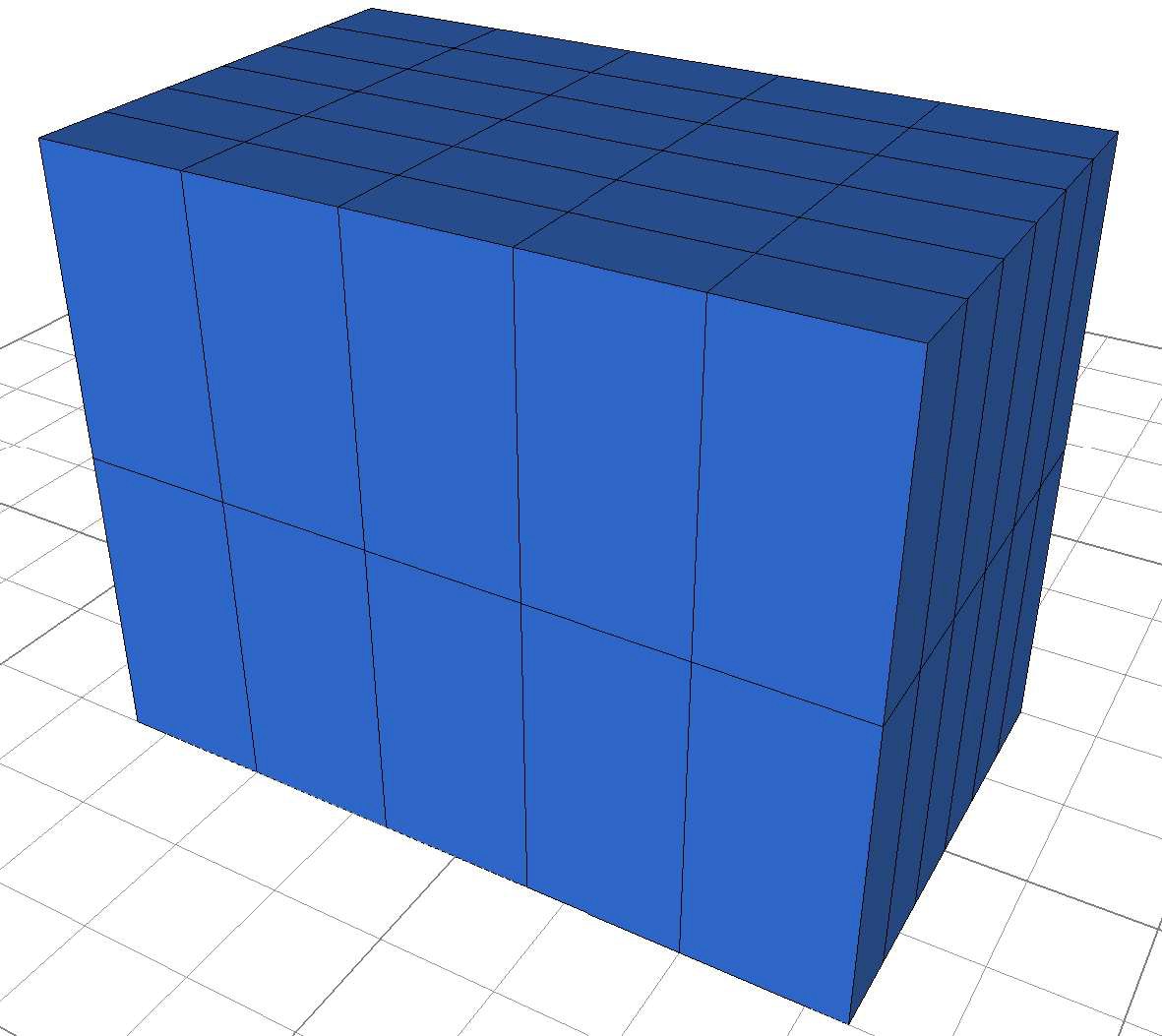
The mesh my-mesh is now a volume which contains 60 hexahedras generated by translation of the previous surface in the x-direction.